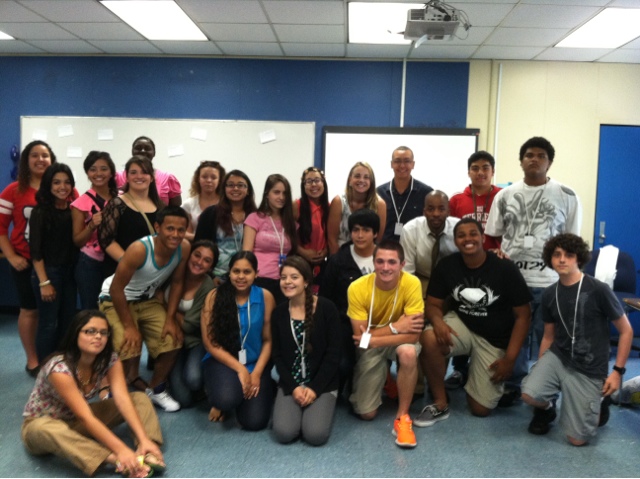
Thank you all for such an amazing year! Stay safe and enjoy the summer!
Wednesday, June 19, 2013



Thursday, June 13, 2013
Annotation Post-Assessment
Today was another "wrap-up" day. You took the Annotation Post-Assessment. You had never seen the passage I gave you, and all you had to do was annotate it. Hopefully, you know what you need to do in order to annotate well and hopefully you show significant improvement from the beginning of the year when I had you annotate another passage. The goal is to carry this skill throughout your high school career and beyond. It will be an invaluable tool you'll need in order to do well academically.
Then, we wrapped up Night by taking your final Night Quiz and going over Elie's final pages of his memoir. Hopefully you learned something from the books we have read this year, and at least enjoyed them even a little bit. As Mr. Hannah and I told you in the beginning of the year, if all you get out of this class is that you become avid readers, then I'm glad.
Tomorrow, we'll continue to wrap things up with Ms. DeRousi and her final Morphology lesson and start going over some strategies you can use for taking the final exam next week.
DEETS
In-class:
--Annotation Post-Assessment
--Finish Night
HW:
--Start studying for the final!
Then, we wrapped up Night by taking your final Night Quiz and going over Elie's final pages of his memoir. Hopefully you learned something from the books we have read this year, and at least enjoyed them even a little bit. As Mr. Hannah and I told you in the beginning of the year, if all you get out of this class is that you become avid readers, then I'm glad.
Tomorrow, we'll continue to wrap things up with Ms. DeRousi and her final Morphology lesson and start going over some strategies you can use for taking the final exam next week.
DEETS
In-class:
--Annotation Post-Assessment
--Finish Night
HW:
--Start studying for the final!
Wednesday, June 12, 2013
Post-Assessment
Today you took Ms. DeRousi's post-assessment. Again, this is not graded and will not affect your overall grade in any way. This is simply to see how far you've progressed over the course of the semester.
Then, you were given the rest of the period for DEAR time. Hopefully, most of you used it to finish Night. If you've already finished the book, you were able to have a longer period of time to do some reading.
Tomorrow, you'll be taking your final quiz for the semester on annotation. You'll be given a passage of writing you've never seen before and be asked to annotate it. Let's see how much you've learned! Then, we'll be wrapping up Night.
DEETS
In-class:
--Post-Assessment
--DEAR
HW:
--Finish reading Night
Then, you were given the rest of the period for DEAR time. Hopefully, most of you used it to finish Night. If you've already finished the book, you were able to have a longer period of time to do some reading.
Tomorrow, you'll be taking your final quiz for the semester on annotation. You'll be given a passage of writing you've never seen before and be asked to annotate it. Let's see how much you've learned! Then, we'll be wrapping up Night.
DEETS
In-class:
--Post-Assessment
--DEAR
HW:
--Finish reading Night
Monday, June 10, 2013
Research Paper Wrap Up
Today I showed you how to set up your Works Cited page. This is very simple to do especially since I provided you with that sample on Schoology under the Research Paper folder. In case you forgot, here's how you do it.
Author's Last Name, First Name. "Article Title." Website/Newspaper.
Just cite the three sources you used. Remember, some of you may only have to cite two sources because you used two quotes from the same article.
The Works Cited page is the last page of your research paper. It's its own page. Make sure to get the format exactly as I showed you in the sample. You will lose points if you have it formatted incorrectly.
As for your research papers due tomorrow, I cannot stress how important these are. Make sure you are ON TIME tomorrow. There will be absolutely no excuses. They need to be printed, as well as have your rough draft and peer edit sheet attached with it.
If you have ANY questions at all, today is the day to come after school and get it done. I will not be answering emails late into the night. You've had over a month to work on this. Now is not the time to be asking me how to format your paper or how to set up the analysis of a quote.
Get it done and get here early tomorrow!
DEETS
In-class:
--Works Cited page
--Conferences
--Morphology
HW:
--Research Papers due TOMORROW!
Author's Last Name, First Name. "Article Title." Website/Newspaper.
Just cite the three sources you used. Remember, some of you may only have to cite two sources because you used two quotes from the same article.
The Works Cited page is the last page of your research paper. It's its own page. Make sure to get the format exactly as I showed you in the sample. You will lose points if you have it formatted incorrectly.
As for your research papers due tomorrow, I cannot stress how important these are. Make sure you are ON TIME tomorrow. There will be absolutely no excuses. They need to be printed, as well as have your rough draft and peer edit sheet attached with it.
If you have ANY questions at all, today is the day to come after school and get it done. I will not be answering emails late into the night. You've had over a month to work on this. Now is not the time to be asking me how to format your paper or how to set up the analysis of a quote.
Get it done and get here early tomorrow!
DEETS
In-class:
--Works Cited page
--Conferences
--Morphology
HW:
--Research Papers due TOMORROW!
Thursday, June 6, 2013
Chapter 5 of Night
Today you had probably your hardest paragraph quiz to date. This quiz asked you to synthesize what you read in Night, with a movie you're probably all generally familiar with--The Hunger Games. I know this wasn't an easy task, but this is what you'll be looking forward to next year. In the 10th grade and beyond, you'll be asked to take multiple sources (that could seem on the surface very unrelated) but then find connections between them all. If you struggled with this quiz, that's okay. But hopefully, you at least are looking at your old quizzes and not making the same mistakes twice.
As for the review, please take another look on Schoology under the Night folder if you felt you didn't quite understand what we went over today in class. For tomorrow, please read pages 85-97.
And as always, please make sure you're taking this time to revise the rough drafts of your research paper and ask me any questions now while you still have them.
DEETS
In-class:
--Night Paragraph Quiz
--Chapter 5 Powerpoint
HW:
--Read pgs. 85-97
--Revise your rough drafts. Final copy due Monday!
As for the review, please take another look on Schoology under the Night folder if you felt you didn't quite understand what we went over today in class. For tomorrow, please read pages 85-97.
And as always, please make sure you're taking this time to revise the rough drafts of your research paper and ask me any questions now while you still have them.
DEETS
In-class:
--Night Paragraph Quiz
--Chapter 5 Powerpoint
HW:
--Read pgs. 85-97
--Revise your rough drafts. Final copy due Monday!
Tuesday, June 4, 2013
Peer Review
Today we worked on your peer reviews. Hopefully you got some valuable feedback from your peers about what you can do to make your research paper better. Please be mindful of their corrections and take this seriously. Revision is not just about fixing grammatical mistakes. Sometimes, it requires rearranging things, or even deleting and adding more material. It can be difficult, but it's worth it in the end.
Get to work and come see me or Mr. Hannah before or after school for extra guided attention.
DEETS
In-class:
In-class:
--Peer Review
HW:
--Revise your research papers
--Read pgs. 66-84 due Thursday
Monday, June 3, 2013
Chapter 4
Today I checked to make sure you had your rough drafts of your research paper done. For those of who you have formatting issues, as we said last week, you have a week to get those fixed. Do not come in on Monday with the final draft of your research paper with all those errors because you will automatically start off with an 80.
Also, for those of you who didn't do it at all, now's the time to get it done. Between Tuesday and Wednesday, we'll be peer reviewing so if you don't have your rough draft of your research paper done, you will not be able to participate and get feedback from your peers on how to make your paper better. Likewise, if you don't bring in your rough draft, you will be hard-pressed to have Mr. Hannah or I to help you as we'll be busy assisting the students who actually did their work. Bottom line: get this done.
The powerpoint we went over today in class based on Chapter 4 of Night is up on Schoology under the Night folder. If you have any questions on it, please feel free to email me or Mr. Hannah.
Also, I know the documentary we watched today may have been graphic, but it's important to see some of these first-hand account footage of the Holocaust in order for us to fully understand. Because we live in such a digital age, sometimes we never really understand something or feel something until we actually see it first-hand. I know some parts may have been difficult to watch, but it's important that we are aware of the truth of what actually happened during this time period.
DEETS
In-class:
--Rough Draft Check
--Chapter 4 Powerpoint
--Night and Fog Documentary
--Morphology
HW:
--Rough drafts completed for Peer Review
--Read pgs. 66-84 by Thursday
Also, for those of you who didn't do it at all, now's the time to get it done. Between Tuesday and Wednesday, we'll be peer reviewing so if you don't have your rough draft of your research paper done, you will not be able to participate and get feedback from your peers on how to make your paper better. Likewise, if you don't bring in your rough draft, you will be hard-pressed to have Mr. Hannah or I to help you as we'll be busy assisting the students who actually did their work. Bottom line: get this done.
The powerpoint we went over today in class based on Chapter 4 of Night is up on Schoology under the Night folder. If you have any questions on it, please feel free to email me or Mr. Hannah.
Also, I know the documentary we watched today may have been graphic, but it's important to see some of these first-hand account footage of the Holocaust in order for us to fully understand. Because we live in such a digital age, sometimes we never really understand something or feel something until we actually see it first-hand. I know some parts may have been difficult to watch, but it's important that we are aware of the truth of what actually happened during this time period.
DEETS
In-class:
--Rough Draft Check
--Chapter 4 Powerpoint
--Night and Fog Documentary
--Morphology
HW:
--Rough drafts completed for Peer Review
--Read pgs. 66-84 by Thursday
Friday, May 31, 2013
Concluding Paragraph
Today we worked on the concluding paragraph. Here are the main things you want to remember about the concluding paragraph:
--You need to summarize the thesis statement but put it into a specific context.
--Then, summarize the effects of your main points. For example, summarize the effects of drug and alcohol abuse in teens, or summarize the effects of students working together in virtual study groups.
--Finally, leave your reader with a final thought. If you have been arguing the benefits of social media, give your reader an example of how social media can be used even more widely than it already is, or explain another benefit that you haven't mentioned before. If you have been arguing the harms of social media, give your reader a solution to some of the problems that you've been talking about.
For homework, you need to type out your ENTIRE research paper and bring it to class printed. Remember also what Mr. Hannah and I said about formatting. If you're typing your research paper out on Notes on your iPad, you're going to have to do some re-formatting when you copy and paste it into Microsoft Word.
If you have any questions, please email me or Mr. Hannah.
DEETS
In-class:
--Morphology Quiz
--Concluding Paragraph
HW:
--Rough Draft due! (typed and printed!)
--Read to pg. 65 in Night
--You need to summarize the thesis statement but put it into a specific context.
--Then, summarize the effects of your main points. For example, summarize the effects of drug and alcohol abuse in teens, or summarize the effects of students working together in virtual study groups.
--Finally, leave your reader with a final thought. If you have been arguing the benefits of social media, give your reader an example of how social media can be used even more widely than it already is, or explain another benefit that you haven't mentioned before. If you have been arguing the harms of social media, give your reader a solution to some of the problems that you've been talking about.
For homework, you need to type out your ENTIRE research paper and bring it to class printed. Remember also what Mr. Hannah and I said about formatting. If you're typing your research paper out on Notes on your iPad, you're going to have to do some re-formatting when you copy and paste it into Microsoft Word.
If you have any questions, please email me or Mr. Hannah.
DEETS
In-class:
--Morphology Quiz
--Concluding Paragraph
HW:
--Rough Draft due! (typed and printed!)
--Read to pg. 65 in Night
Thursday, May 30, 2013
Introductory Paragraph
Today we worked on the introductory paragraphs to our research paper. For those of you who'd like to reference the powerpoint we went over in class, it's up on Schoology under the Research Paper folder.
Don't forget: the thesis is the LAST SENTENCE of the introductory paragraph.
Here are some other important things to remember:
--The hook is the first sentence of your research paper. It can be a surprising fact, humor, or a quote. It's meant to "hook" your reader into your research paper and make them interested in what you're writing about.
--The transition is the sentence that comes after the hook. This sentence is meant to link your hook into the main topic of your research paper--social media.
--Then, summarize the three main points you'll be discussing in your research paper.
--Lastly, finish with your thesis.
For tomorrow, you'll need to have your graphic organizer completed as well as either a written-out or printed copy of your introductory paragraph.
Tomorrow, we'll work on the concluding paragraph.
DEETS
In-class:
--Intro Paragraph PPT
--Intro Paragraph Organizer
HW:
--Intro Paragraph Organizer and written-out or printed copy of intro paragraph
--Morphology Quiz tomorrow!
--Read to pg. 65 in Night due Monday
--Rough draft due Monday!
Don't forget: the thesis is the LAST SENTENCE of the introductory paragraph.
Here are some other important things to remember:
--The hook is the first sentence of your research paper. It can be a surprising fact, humor, or a quote. It's meant to "hook" your reader into your research paper and make them interested in what you're writing about.
--The transition is the sentence that comes after the hook. This sentence is meant to link your hook into the main topic of your research paper--social media.
--Then, summarize the three main points you'll be discussing in your research paper.
--Lastly, finish with your thesis.
For tomorrow, you'll need to have your graphic organizer completed as well as either a written-out or printed copy of your introductory paragraph.
Tomorrow, we'll work on the concluding paragraph.
DEETS
In-class:
--Intro Paragraph PPT
--Intro Paragraph Organizer
HW:
--Intro Paragraph Organizer and written-out or printed copy of intro paragraph
--Morphology Quiz tomorrow!
--Read to pg. 65 in Night due Monday
--Rough draft due Monday!
Wednesday, May 29, 2013
Night Chapter 3
Today you had your second paragraph quiz on Night on chapters 2 and 3. This should have been an easy one!
Afterwards, we went through the Chapter 3 Powerpoint to highlight some of the main points in the chapter. I've uploaded the powerpoint up on Schoology under the Night folder.
Here's the video we watched on the Bystander Effect. Remember, this may explain why no one did anything when many people knew exactly what was going on in the concentration camps.
Please make sure you go through the powerpoint once more to refresh your memory of everything we talked about in class today.
Tomorrow, we'll be working on our introductory paragraphs as part of our research paper. Friday, we'll be working on our concluding paragraphs. And Monday is when the Rough Draft is due.
NOTE: If you haven't finished your MEAL organizers by tomorrow, Mr. Hannah and I can do very little to help you. If you need the help, please come back after school today to catch you up. If not, you're going to be very behind in writing your rough draft for Monday's class.
Get it done!
DEETS
In-class:
--MEAL Organizers Check
--Chapter 3 Quiz
--Chapter 3 Powerpoint
HW:
--Read up to pg. 65 in Night by Monday
Afterwards, we went through the Chapter 3 Powerpoint to highlight some of the main points in the chapter. I've uploaded the powerpoint up on Schoology under the Night folder.
Here's the video we watched on the Bystander Effect. Remember, this may explain why no one did anything when many people knew exactly what was going on in the concentration camps.
Please make sure you go through the powerpoint once more to refresh your memory of everything we talked about in class today.
Tomorrow, we'll be working on our introductory paragraphs as part of our research paper. Friday, we'll be working on our concluding paragraphs. And Monday is when the Rough Draft is due.
NOTE: If you haven't finished your MEAL organizers by tomorrow, Mr. Hannah and I can do very little to help you. If you need the help, please come back after school today to catch you up. If not, you're going to be very behind in writing your rough draft for Monday's class.
Get it done!
DEETS
In-class:
--MEAL Organizers Check
--Chapter 3 Quiz
--Chapter 3 Powerpoint
HW:
--Read up to pg. 65 in Night by Monday
Tuesday, May 28, 2013
Finishing my MEAL
After Morphology and DEAR time, we got back to finishing our MEAL organizers.
Remember, the powerpoint on the MEAL format, as well as that slide with all the different word banks are up on Schoology under the Research Paper folder.
After today's class, Mr. Hannah and I came up with a list of words that you could interchange in your research paper so you're not using the same words over and over again:
Social Media:
social networking
Internet
Twitter
Facebook
YouTube
Instagram
Teenagers:
young adults
adolescents
minors
the youth
young people
children
Internet:
World Wide Web
cyberspace
the Web
online
information superhighway
computer network
Research:
examination
study
investigation
statistics
analysis
review
inspection
If we come across any other words that need synonyms, I'll list them here.
As for tomorrow, make sure you read pages 24-47 of Night tonight to prepare for your next paragraph quiz tomorrow. Also, this is the critical point in the research paper. If you feel your analysis is not utterly fantastically unbelievably amazing, YOU NEED TO STAY AFTER SCHOOL THIS WEEK. I cannot urge you enough to get the extra help now before we wrap up this whole process. This will be the difference between passing and failing this class, as I've assured you many times before.
DEETS
In-class:
--Morphology
--DEAR
--Finish MEAL
HW:
--Read pgs. 24-47 in Night
--Check Analysis
--Finish MEAL organziers
Remember, the powerpoint on the MEAL format, as well as that slide with all the different word banks are up on Schoology under the Research Paper folder.
After today's class, Mr. Hannah and I came up with a list of words that you could interchange in your research paper so you're not using the same words over and over again:
Social Media:
social networking
Internet
YouTube
Teenagers:
young adults
adolescents
minors
the youth
young people
children
Internet:
World Wide Web
cyberspace
the Web
online
information superhighway
computer network
Research:
examination
study
investigation
statistics
analysis
review
inspection
If we come across any other words that need synonyms, I'll list them here.
As for tomorrow, make sure you read pages 24-47 of Night tonight to prepare for your next paragraph quiz tomorrow. Also, this is the critical point in the research paper. If you feel your analysis is not utterly fantastically unbelievably amazing, YOU NEED TO STAY AFTER SCHOOL THIS WEEK. I cannot urge you enough to get the extra help now before we wrap up this whole process. This will be the difference between passing and failing this class, as I've assured you many times before.
DEETS
In-class:
--Morphology
--DEAR
--Finish MEAL
HW:
--Read pgs. 24-47 in Night
--Check Analysis
--Finish MEAL organziers
Thursday, May 23, 2013
MEAL Format
Today we started the MEAL format outline. We worked on our M and L's. The powerpoint is up on Schoology under the Reserch Paper folder.
These outlines will be due by the end of the day on Tuesday. Get it done! You don't want to start this all on Tuesday and not be able to get it done because it will go in as a grade.
Don't forget--tomorrow you need to have pages 1-23 read of Night. You will have your first paragraph quiz. Be ready!
DEETS
In-class:
--MEAL Powerpoint
--MEAL Outlines
HW:
--Read pgs.1-23 of Night for quiz tomorrow!
--Finish MEAL outlines by end of the period on Tuesday
These outlines will be due by the end of the day on Tuesday. Get it done! You don't want to start this all on Tuesday and not be able to get it done because it will go in as a grade.
Don't forget--tomorrow you need to have pages 1-23 read of Night. You will have your first paragraph quiz. Be ready!
DEETS
In-class:
--MEAL Powerpoint
--MEAL Outlines
HW:
--Read pgs.1-23 of Night for quiz tomorrow!
--Finish MEAL outlines by end of the period on Tuesday
Wednesday, May 22, 2013
Analyzing Quotes Continued...
Today you presented your Othello Projects. Thank you for being such great sports through this whole process. I know working in groups is sometimes sressful, but these skills you're learning now are essential to your future. I was also thoroughly impressed with some of the projects I saw today. I saw a lot of creativity and a lot of collaboration. Great work.
After your presentations, we gave you the rest of the period to work on your analysis. Remember, you need to have most of these done by tomorrow, because tomorrow we're starting the M and the L's of your paragraphs. You'll need to have the E and the A's done in order to do that.
Don't slack off now! Once we're done with this step, the research paper is easy-sailing.
DEETS
In-class:
--Othello Presentations
--Index Cards Analysis
HW:
--Index Cards Analysis
--Read pgs. 1-23 of Night due FRIDAY
After your presentations, we gave you the rest of the period to work on your analysis. Remember, you need to have most of these done by tomorrow, because tomorrow we're starting the M and the L's of your paragraphs. You'll need to have the E and the A's done in order to do that.
Don't slack off now! Once we're done with this step, the research paper is easy-sailing.
DEETS
In-class:
--Othello Presentations
--Index Cards Analysis
HW:
--Index Cards Analysis
--Read pgs. 1-23 of Night due FRIDAY
Tuesday, May 21, 2013
Analyzing Quotes
After today's Morphology lesson and DEAR time, we started the crucial part of this entire research paper process--the analysis (duh! duh! duh!).
For the rest of the week, you'll be working on your analysis of the nine quotes you picked. This is the most difficult part of the research paper process because it requires you to think extremely critically, but remember, Mr. Hannah and I are here to help you. You will have plenty of time in class to work on your analysis; however, if you slack off and goof around in class, you will be stuck doing this work at home. Again, this is where a lot of people fall behind in this process and start playing catch-up. Don't let yourself become one of those people. Stay with us!
Here are the main questions you want to ask yourself:
1) What does this quote mean? (Explain/summarize the quote using different words.)
and
2) How does this quote show the cost or benefits of social networking?
Use these sentence starters to help you:
For the explanation--
This means that...
For the analysis--
This shows that....
Things to keep in mind--
--Define unfamiliar words
--Do not use the same words from the quote in your explanation
The powerpoint we went over in class today is up on Schoology under the Research Paper folder for your reference. Go back to this powerpoint if you get stuck on one of your quotes or forget how you're supposed to format your analysis.
DEETS
In-class:
--Morphology
--DEAR
--Analyzing Quotes PPT
--Analysis on Index Cards
HW:
--Group Project due TOMORROW
--Analysis of Index Cards
--Read pgs. 1-23 of Night due FRIDAY
For the rest of the week, you'll be working on your analysis of the nine quotes you picked. This is the most difficult part of the research paper process because it requires you to think extremely critically, but remember, Mr. Hannah and I are here to help you. You will have plenty of time in class to work on your analysis; however, if you slack off and goof around in class, you will be stuck doing this work at home. Again, this is where a lot of people fall behind in this process and start playing catch-up. Don't let yourself become one of those people. Stay with us!
Here are the main questions you want to ask yourself:
1) What does this quote mean? (Explain/summarize the quote using different words.)
and
2) How does this quote show the cost or benefits of social networking?
Use these sentence starters to help you:
For the explanation--
This means that...
For the analysis--
This shows that....
Things to keep in mind--
--Define unfamiliar words
--Do not use the same words from the quote in your explanation
The powerpoint we went over in class today is up on Schoology under the Research Paper folder for your reference. Go back to this powerpoint if you get stuck on one of your quotes or forget how you're supposed to format your analysis.
DEETS
In-class:
--Morphology
--DEAR
--Analyzing Quotes PPT
--Analysis on Index Cards
HW:
--Group Project due TOMORROW
--Analysis of Index Cards
--Read pgs. 1-23 of Night due FRIDAY
Monday, May 20, 2013
Night Timeline
Today we started the introduction to the last book we'll be reading this semester (yay!). But before that, Mr. Hannah and I came around to check your index cards that you were supposed to finish over the weekend. For those of you who completed your index cards, great work. You'll be on track for the rest of the week. For those of you who didn't, I can't say the same. Please (and really, I'm begging) finish your index cards tonight. You won't get credit for completing them because they were due today, but it'll put you at the same speed as everyone else when we jump back to the research paper tomorrow. If you don't, you'll be put in the back of the room and have to finish them then, and then miss out on the most difficult part of the research paper where you're going to need me and Mr. Hannah's help the most. Please don't put yourself at a disadvantage already. Get the easy work done now so you can spend class time on the hard stuff.
As for our introduction to Night, this will be the most emotional books we read all year. In saying so, this isn't a book that you're going to annotate greatly. This book is more for marginal comments on the side as you read, rather than highlighting metaphors or similes. As such, most of the reading of this book will be done at home. For some of you, you may need to put the book down and come back to it because you may become overwhelmed. Mr. Hannah and I feel the best way to do this will be for you to read the book at your own pace, at home, on your own time. We will set markers along the way of which page you need to read up to on what day, but the reading will be done on your own.
Here's what we learned from the timeline:
--This book is a memoir, different from an autobiography which is a nonfiction book about your whole life rather than about one specific experience.
--This book is a Holocaust survivor book about the main character's (Elie Wiesel) experience in a concentration camp during WWII in Nazi Germany.
--After WWI, Germany was left with no money and no where to go. Hitler came up as confident man with lots of ideas about how to better the country. Germany got behind him and elected him "president" of Germany.
--Germany created ghettos, which were walled-off sections of a city where Jews were contained. (Picture Below)

--Germany began "The Final Solution"--a plan to murder all Jews.
--Elie and his family were from Hungary. Hungary wasn't invaded by Germany until 1944, about a year before the war ended. The reason Hungary wasn't invaded sooner was because Hungary was on Germany's good side, until they realized Germany would lose the war and then they bailed on Germany. Once Germany found out Hungary wasn't going to help them anymore, Germnay went after Hungary and took them over in a little less than a week. (Map Below)

--Concentration camps were set up all over Germany. Concentration camps are camps where civilians, prisoners of war, criminals, etc., are put to work under very harsh conditions. Now remember, concentration camps were not just during the Holocaust, and not solely for Jews. Many gypsies, homosexuals, and other frowned-upon people were put there as well. (Picture Below)
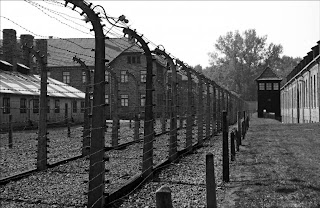


This will be a very intense read with lots of intense discussions. I don't mean to scare you with all these intense images, but we will be looking at and watching some film of this time period, and some of it is uncomfortable to watch. However, it's important that we understand and talk about this incredible time period in our world history instead of silencing it.
As for your projects, we pushed back the due date by a day. However, please do not take this as an opportunity to procrastinate this one more day. Get done whatever you were going to get done tonight, and then run it by me and Mr. Hannah tomorrow. We'll be here to help.
DEETS
In-class:
--Index Cards Check
--Night Timeline
--Group Project Q&A
--Morphology Quiz
HW:
--Index Cards (if you failed to finish them)
--Group Project due Wednesday
--Read pgs.1-23 of Night by Friday
As for our introduction to Night, this will be the most emotional books we read all year. In saying so, this isn't a book that you're going to annotate greatly. This book is more for marginal comments on the side as you read, rather than highlighting metaphors or similes. As such, most of the reading of this book will be done at home. For some of you, you may need to put the book down and come back to it because you may become overwhelmed. Mr. Hannah and I feel the best way to do this will be for you to read the book at your own pace, at home, on your own time. We will set markers along the way of which page you need to read up to on what day, but the reading will be done on your own.
Here's what we learned from the timeline:
--This book is a memoir, different from an autobiography which is a nonfiction book about your whole life rather than about one specific experience.
--This book is a Holocaust survivor book about the main character's (Elie Wiesel) experience in a concentration camp during WWII in Nazi Germany.
--After WWI, Germany was left with no money and no where to go. Hitler came up as confident man with lots of ideas about how to better the country. Germany got behind him and elected him "president" of Germany.
--Germany created ghettos, which were walled-off sections of a city where Jews were contained. (Picture Below)

--Germany began "The Final Solution"--a plan to murder all Jews.
--Elie and his family were from Hungary. Hungary wasn't invaded by Germany until 1944, about a year before the war ended. The reason Hungary wasn't invaded sooner was because Hungary was on Germany's good side, until they realized Germany would lose the war and then they bailed on Germany. Once Germany found out Hungary wasn't going to help them anymore, Germnay went after Hungary and took them over in a little less than a week. (Map Below)


--Elie's story is about his experience in one of these concentration camps. He was taken when he was only 15. Here's a picture of Elie before, and after. Notice how starved these prisoners were and how poor and unclean their living conditions were.


This will be a very intense read with lots of intense discussions. I don't mean to scare you with all these intense images, but we will be looking at and watching some film of this time period, and some of it is uncomfortable to watch. However, it's important that we understand and talk about this incredible time period in our world history instead of silencing it.
As for your projects, we pushed back the due date by a day. However, please do not take this as an opportunity to procrastinate this one more day. Get done whatever you were going to get done tonight, and then run it by me and Mr. Hannah tomorrow. We'll be here to help.
DEETS
In-class:
--Index Cards Check
--Night Timeline
--Group Project Q&A
--Morphology Quiz
HW:
--Index Cards (if you failed to finish them)
--Group Project due Wednesday
--Read pgs.1-23 of Night by Friday
Friday, May 17, 2013
Index Cards Continued...
Today you finished working on what you started yesterday. After Ms. DeRuosi gave your Morphology lesson, you went back to finding quotes from your 3 sources. All 9 of your cards will be due on Monday. Mr. Hannah and I will be coming around to make sure that these are finished.
Remember, if you do not complete this first step, you'll be behind for the next step and you'll forever be playing catch-up. Don't let yourself get far behind, otherwise you're never going to catch up!
After, you were given some time to get together in your groups and work on your group projects. These are due on Tuesday. Please email me or Mr. Hannah if you and your group need assistance this weekend.
DEETS
In-class:
--Morphology
--DEAR
--Index Cards
--Group Project
HW:
--All 9 Index Cards due Monday
--Group Project due Tuesday
Remember, if you do not complete this first step, you'll be behind for the next step and you'll forever be playing catch-up. Don't let yourself get far behind, otherwise you're never going to catch up!
After, you were given some time to get together in your groups and work on your group projects. These are due on Tuesday. Please email me or Mr. Hannah if you and your group need assistance this weekend.
DEETS
In-class:
--Morphology
--DEAR
--Index Cards
--Group Project
HW:
--All 9 Index Cards due Monday
--Group Project due Tuesday
Thursday, May 16, 2013
Index Cards
Today, we started pulling quotes from our sources for our research paper. If you chose the benefits side of social networking, you'll only be using sources B, E, and F. If you chose the harmful side of social networking, you'll only be using sources A, C, and D.
Today, you needed to pull 3 quotes from each of your 3 sources for a total of 9 quotes. Each of your quotes needs to answer the question why and how. Why is this quote useful to your argument? How does this quote defend your support of the benefits or harms of social networking?
Before you were able to write each of your quotes on your index cards, you needed to get approval from me and Mr. Hannah. Once you did, you needed to follow the format on how to write the quote properly on your index card. I've added the picture of how to properly write your index cards on Schoology under the Research Paper folder.
These index cards will be due on Monday, so it's in your best interest to get as many done between today and tomorrow so you won't have to do any over the weekend.
After this, we broke class about twenty minutes before the bell rang to give all of you some time to meet in your groups for your group project. Again, Mr. Hannah and I are here to help. Please stop by after school or email us with any questions to make sure you're doing the very best work on this project. Remember, besides the research paper, this will be your only test grade of the term.
DEETS
In-class:
--Index Cards
--Group Project
HW:
--Index Cards (due Monday
--Group Project (due Tuesday)
Today, you needed to pull 3 quotes from each of your 3 sources for a total of 9 quotes. Each of your quotes needs to answer the question why and how. Why is this quote useful to your argument? How does this quote defend your support of the benefits or harms of social networking?
Before you were able to write each of your quotes on your index cards, you needed to get approval from me and Mr. Hannah. Once you did, you needed to follow the format on how to write the quote properly on your index card. I've added the picture of how to properly write your index cards on Schoology under the Research Paper folder.
These index cards will be due on Monday, so it's in your best interest to get as many done between today and tomorrow so you won't have to do any over the weekend.
After this, we broke class about twenty minutes before the bell rang to give all of you some time to meet in your groups for your group project. Again, Mr. Hannah and I are here to help. Please stop by after school or email us with any questions to make sure you're doing the very best work on this project. Remember, besides the research paper, this will be your only test grade of the term.
DEETS
In-class:
--Index Cards
--Group Project
HW:
--Index Cards (due Monday
--Group Project (due Tuesday)
Research Paper Sources
Today we started our research paper! Hooray! (I can feel all the hateful stares already.)
In reality, this is a long and difficult process. This will be a month-long project that ultimately will come down to a final paper worth two test grades. Because these will be your only test grades (besides the Othello project) for this term, this research paper will weigh heavily on your final grade for the semester. It is most likely that if you do not pass the research paper, you will not pass this class. As such, now is the time to buckle your seat belts and stay with us. As you saw on today's Consent Form, there will be multiple steps along the way before you turn in the final paper. All of these milestones will go in as grades in my Gradebook either as homework or quiz grades so it's essential that you keep yourself on track and get them all in.
Here are the sources:
Nonprofits that combined this technique with more traditional promotional methods, such as mailed pamphlets, have reported a 40 percent increase in their fundraising, USA Today noted in a 2011 report.
Social media sites other than Facebook and Twitter have also been known to bring users together for a good cause.
In December, a Reddit user reached out to the online community by posting an image gallery of his girlfriend's nephew, who needed a bone marrow transplant.
Along with the photos, he asked for donations to help out his family. Within hours, the Internet community had pitched in $31,000 for the cause. Just six days later, the total had risen to about $55,000.
In reality, this is a long and difficult process. This will be a month-long project that ultimately will come down to a final paper worth two test grades. Because these will be your only test grades (besides the Othello project) for this term, this research paper will weigh heavily on your final grade for the semester. It is most likely that if you do not pass the research paper, you will not pass this class. As such, now is the time to buckle your seat belts and stay with us. As you saw on today's Consent Form, there will be multiple steps along the way before you turn in the final paper. All of these milestones will go in as grades in my Gradebook either as homework or quiz grades so it's essential that you keep yourself on track and get them all in.
Here are the sources:
Source A
Excerpt from “‘Defriending’ Facebook: When Social Networking
Starts to Get in the Way of Real Life, Some Teens Are Deciding to Log Off” by Katie
Hafner as published in New York Times Upfront.
Facebook has 350 million members
worldwide who, collectively, spend 10 billion minutes there every day, checking
in with friends, writing on people's walls, clicking through photos, and
generally keeping up with who's doing what at any given moment. Make that 9.9
billion and change.
Recently, Halley Lamberson, 17, and
Monica Reed, 16, juniors at San
Francisco University
High School
The two friends now allow
themselves to log on to Facebook on the first Saturday of every month—and
that's it.
They are among the many teens who
are recognizing the huge distraction Facebook presents—the hours it consumes,
to say nothing of the toll it takes during exams and college applications.
In fact, while "Internet
addiction" is not really an official medical diagnosis, spending excessive
time online is a growing problem worldwide, not only with social networks but
also with gaming and other online activities. As many as 1 in 8 Americans
suffer from problematic Internet use, according to researchers at Stanford University
in California .
The numbers are higher in some Asian countries, especially for teens: Up to 30
percent of South Koreans under 18, for instance, are at risk of Internet
addiction, according to researchers at Hanyang
University in Seoul .
Treatment centers for Internet
addiction have sprung up not only in Asia but in the U.S. as well. They range from
military-style boot camps to residential treatment centers similar to those
used for drug and alcohol addiction.
When it comes to staying off
Facebook, some teens, like Monica and Halley, are forming support groups.
Others deactivate their accounts or ask someone they trust to change their
password and keep control of it until they feel ready to have it back.
Facebook, launched in 2004 by Mark
Zuckerberg, then a 19-year-old sophomore at Harvard, won't say how many users
have deactivated service. But Kimberly Young, a psychologist who is the
director of the Center for Internet Addiction Recovery in Bradford , Pennsylvania
"It's like an eating
disorder," says Young. "You can't eliminate food. You just have to
make better choices about what you eat." She adds, "And what you do
online."
At its worst, Facebook addiction
can lead to a loss of perspective about what's important, or even to a loss of
a person's sense of self, according to Sherry Turkle, director of the
Initiative on Technology and Self at the Massachusetts Institute of Technology.
Turkle recalls that one 18-year-old
working on a college application was burned out from trying to live up to his
own online descriptions of himself. "Facebook wasn't merely a
distraction," Turkle says, "but it was really confusing him about who
he was."
Source B
Excerpt from “Study Suggests Benefits of Social Media in the
Classroom” by Jason Thomaszewski on Educationworld.com
An educational theory gaining momentum in the literature may
open the door to increased use of social media in schools.
Dr. Richard
J. Light (Harvard School of Education) is a proponent of social constructivism, an aspect of social learning theory. This theory—supported by research identifying factors leading to
college students’ success—says that people learn most effectively when they
interact with other learners. According to Light, the strongest determinant of
students’ success in college is their ability to form or participate in small
study groups. He suggests that this is more important than their instructors’
teaching styles. Student research participants who studied in groups, even only
once a week, were more engaged in their studies, were better prepared for
class, and learned significantly more than students who worked on their own.
These
outcomes have led some to tout social media—and its opportunities for “virtual
study groups”--as an excellent way to increase student learning. Many routinely
use Twitter hashtags and Facebook pages to discuss specific topics. Social media sites such as EdMoto and Saywire may be
safer options for students, since they are closed to individuals outside of
class and allow teachers to closely monitor interactions. For a discussion of
additional free, secure collaboration tools such as brainstorming and chat
platforms, seeFree Tech Tools for Tough Times.
Light’s
report added that social media, as a technology that is deemed “cool,” can
attract younger learners. Social media platforms enable many engaging classroom activities, including “communities of
practice” where learners can interact and share ideas. “This group learning
format appeals to younger, socially conscious learners and is built around the
notion that 'many minds are better than one,' " the report stated.
For
example, the paper The Instructional Power of Digital Games, Social Networking and
Simulations and How Teachers Can Leverage Them describes how
one high school literature class used the Ning platform to promote discussion
and share resources related to a book they were reading.
Studies
suggest that approximately 70 percent of all organizations engage in structured
collaboration using online social learning tools such as blogs, wikis and
podcasts. The rise parallels the increased use of online tools like social
media sites in schools.
Experts
remind us, however, that there are clear “do’s and don’ts” for integrating
social media in the classroom. According to the report Technology in Schools: What the Research Says, the choice to
implement any classroom technology should be based on sound learning theory and
should support a specific aspect of the curriculum. Teachers should have the
backing and support of school leadership and have received prior training in
use of technology tools to facilitate student learning. In addition, they
should gather data to ensure that use of the technology is having the intended
positive effects on students.
Finally,
schools should update their Acceptable Use Policy (AUP) to include proper use
of social media on the part of both educators and students.
Source C
Excerpt from “Social Networking Increases Risk of Teen Drug
Abuse” by Molly O’Toole on Rueters.com
On a
typical day, 70 percent of teens ages 12 to 17 -- 17 million teenagers -- spend
from a minute to hours on Facebook,
Myspace and other social networking sites, according to The National Center on
Addiction and Substance Abuse (CASA) at Columbia University
But for
this same age bracket, social-network-savvy teens are five times more likely to
use tobacco;
three times more likely to use alcohol; and twice as likely to use marijuana
than teens who do not spend any of their day on social networking sites.
"The results are profoundly
troubling ... the anything goes, free-for-all world of Internet expression,
suggestive television programing and what-the-hell attitudes put teens at
sharply increased risk of substance abuse," CASA Founder and Chairman
Joseph Califano Jr said in a statement.
Knowledge Networks surveyed 1,037
teens ages 12 to 17 and 528 parents of these teens over the Internet. QEV
Analytics, Ltd. conducted the annual telephone survey of 1,006 teens 12 to 17,
asking questions CASA has used to track trends.
Results revealed that half of teens
who spend any time social networking in a given day have seen pictures of kids
"drunk, passed out, or using drugs on these sites."
But even beyond the daily teen
social networkers, 14 percent of teens who reported spending no time on such
sites in a given day said they have seen pictures of drunk, passed out, or
drug-using kids on the sites.
Teens who had seen such pictures
were four times likelier to be able to get marijuana, three times likelier to
be able to get prescription drugs without a prescription, and twice as likely
to be able to get alcohol in a day at most.
Teens who had seen such pictures
were also more than twice as likely to think they would try drugs in the
future, and much more likely to have friends who used illegal drugs.
"Especially troubling-- and
alarming-- are that almost half of the teens who have seen pictures ... first
saw such pictures when they were 13 years of age or younger," the report
said. "These facts alone should strike Facebook fear
into the hearts of parents of young children."
But the surveys, which also
questioned adults, found that nine of 10 parents do not think teens spending
time social networking are any more likely to drink or use drugs.
Only 64 percent of parents said
they monitor their child's social networking page.
The authors of the report called
for parents -- still the greatest influence on a teen's decision whether to
smoke, drink, or use drugs -- to present a consistent and unified front against
substance abuse.
"In the cultural seas into
which we toss our teens, parents are essential to preventing their substance
abuse."
The report also urged operators of
social networking sites to curb such images and deny use to adolescents who post
them.
"Continuing to provide the
electronic vehicle for transmitting such images constitutes electronic child
abuse," it said.
Source D
Excerpt from “Consumer Reports: Facebook privacy problems
are on the rise” by Rose Golijan as published on NBC News.com
Consumer
Reports released its annual report on Internet privacy and
security Thursday, placing Facebook front and center. Issues covered by
the influential consumer watchdog group included updates on data leaks,
hacks, scams, and the like, while featuring a separate report focusing entirely
on Facebook and how the social network deals with privacy, security and
the very personal information we so willingly share.
The "State of the Net" research and statistics from Consumer Reports suggest that there is an overall increase in certain digital problems — such as ID thefts, phishing schemes, and security breaches — in the past year, while issues related malware and unauthorized credit charges are occurring neither more nor less frequently than in the prior 12 months. The most startling findings however, involve how much Facebook knows about its nearly 900 million members, and how much we freely offer — information mined by employers, insurers, the IRS, divorce lawyers, as well as identity thieves and other criminals.
WhileU.S.
legislators speak out against employers requesting Facebook passwords from
employees, the following information — much of it sensitive and
potentially damaging — doesn't require special access to uncover:
The "State of the Net" research and statistics from Consumer Reports suggest that there is an overall increase in certain digital problems — such as ID thefts, phishing schemes, and security breaches — in the past year, while issues related malware and unauthorized credit charges are occurring neither more nor less frequently than in the prior 12 months. The most startling findings however, involve how much Facebook knows about its nearly 900 million members, and how much we freely offer — information mined by employers, insurers, the IRS, divorce lawyers, as well as identity thieves and other criminals.
While
- 4.7 million “liked” a Facebook page about health
conditions or treatments (details an insurer might use against you).
- 4.8 million have used Facebook to say where they planned to go on a certain day (a potential tip-off for burglars)
- 20.4 million included their birth date, which can be used by identity thieves
- 39.3 million identified family members in their profile
- 900K discussed finances on their wall
- 1.6 million liked a page pertaining to racial or ethnic affiliations
- 2.3 million liked a page regarding sexual orientation
- 7.7 million liked a page pertaining to a religious affiliation
- 2.6 million discussed their recreational use of alcohol on their wall
- 4.6 million discussed their love life on their wall
- 4.8 million have used Facebook to say where they planned to go on a certain day (a potential tip-off for burglars)
- 20.4 million included their birth date, which can be used by identity thieves
- 39.3 million identified family members in their profile
- 900K discussed finances on their wall
- 1.6 million liked a page pertaining to racial or ethnic affiliations
- 2.3 million liked a page regarding sexual orientation
- 7.7 million liked a page pertaining to a religious affiliation
- 2.6 million discussed their recreational use of alcohol on their wall
- 4.6 million discussed their love life on their wall
For its
study, Consumer Reports "queried Facebook and interviewed some two dozen
others, including security experts, privacy lawyers, app developers, and
victims of security and privacy abuse." It "dug into private,
academic, and government research, as well as Facebook’s labyrinthian policies
and controls." It also "surveyed 2,002 online households, including
1,340 that are active on Facebook" and projected the resulting data to
estimate national totals. Among its other findings, Consumer Reports noted
these problems connected with the information we share: Some don't use
privacy controls. Almost 13 million users said they had
never set, or didn’t know about, Facebook’s privacy tools. And 28
percent shared all, or almost all, of their wall posts with an
audience wider than just their friends.
Facebook collects more data than you may imagine. For example, did you know that Facebook gets a report every time you visit a site with a Facebook “Like” button, even if you never click the button, are not a Facebook user, or are not logged in?
Your data is shared more widely than you may wish. Even if you have restricted your information to be seen by friends only, a friend who is using a Facebook app could allow your data to be transferred to a third party without your knowledge.
Legal protections are spotty.U.S.
online privacy laws are weaker than those of Europe
and much of the world, so you have few federal rights to see and
control most of the information that social networks collect about
you.
And problems are on the rise. Eleven percent of households using Facebook said they had trouble last year, ranging from someone using their log-in without permission to being harassed or threatened. That projects to 7 million households — 30 percent more than last year.
In response to the Consumer Reports study, Andrew Noyes, Facebook's manager of Public Policy Communications, gave msnbc.com the following statement:
We believe more than 900 million consumers have voluntarily decided to share and connect on Facebook because we provide them options and tools that place them in control of their information and experience. As part of our effort to empower and educate consumers, we always welcome constructive conversations about online privacy and safety.
Consumer Reports does note Facebook's efforts to simplify privacy settings and improve security — as well settle allegations from the Federal Trade Commission and submit to independent audits for the next 20 years. But the watchdog outfit also calls out Facebook's support of the controversial Cyber Intelligence Sharing and Protection Act (HR 3523), which would allow the social network to share your information with the government without judicial oversight, and states that the social network needs to do more.
Facebook collects more data than you may imagine. For example, did you know that Facebook gets a report every time you visit a site with a Facebook “Like” button, even if you never click the button, are not a Facebook user, or are not logged in?
Your data is shared more widely than you may wish. Even if you have restricted your information to be seen by friends only, a friend who is using a Facebook app could allow your data to be transferred to a third party without your knowledge.
Legal protections are spotty.
And problems are on the rise. Eleven percent of households using Facebook said they had trouble last year, ranging from someone using their log-in without permission to being harassed or threatened. That projects to 7 million households — 30 percent more than last year.
In response to the Consumer Reports study, Andrew Noyes, Facebook's manager of Public Policy Communications, gave msnbc.com the following statement:
We believe more than 900 million consumers have voluntarily decided to share and connect on Facebook because we provide them options and tools that place them in control of their information and experience. As part of our effort to empower and educate consumers, we always welcome constructive conversations about online privacy and safety.
Consumer Reports does note Facebook's efforts to simplify privacy settings and improve security — as well settle allegations from the Federal Trade Commission and submit to independent audits for the next 20 years. But the watchdog outfit also calls out Facebook's support of the controversial Cyber Intelligence Sharing and Protection Act (HR 3523), which would allow the social network to share your information with the government without judicial oversight, and states that the social network needs to do more.
Source E
Excerpt from “Social Networking Benefits Validated” by Karen
Goldberg Goff as published in The
Washington Times.
Researchers in the study, titled
the Digital Youth Project and conducted primarily at the University of Southern
California and the University of California at Berkeley, found that in our
increasingly technological world, the constant communication that social
networking provides is encouraging useful skills. The study looked at more than
5,000 hours of online observation and found that the digital world is creating
new opportunities for young people to grapple with social norms, explore
interests, develop technical skills and work on new forms of self-expression.
“There are myths about kids
spending time online — that it is dangerous or making them lazy,” says Mizuko
Ito, lead author of the study, which will be the basis of a forthcoming book,
“Hanging Out, Messing Around, Geeking Out: Living and Learning With New Media.”
“But we found that spending time online is essential for young people to pick
up the social and technical skills they need to be competent citizens in the
digital age.”
Co-author Lisa Tripp, now an
assistant professor at Florida
State University
“Certain technical skills in the
coming years are not going to be just about consuming media,” she says. “It is
also going to be about producing media. It is not just about writing a blog,
but also how to leave comments that say something. Learning to communicate like
this is contributing to the general circulation of culture.”
That means anything from a video
clip to a profile page is going to reflect the self-expression skills one has,
so teens might as well practice what will say who they are.
Social networking also contributes
greatly to teens’ extended friendships and interests, Ms. Tripp says. While the
majority of teens use sites such as MySpace and Facebook to “hang out” with
people they already know in real life, a smaller portion uses them to find
like-minded people. Before social networking, the one kid in school who was,
say, a fan of Godzilla or progressive politics might find himself isolated.
These days, that youngster has peers everywhere.
“This kind of communication has let
teens expand their social circle by common interests,” Ms. Tripp says. “They can
publicize and distribute their work to online audiences and become sort of a
microexpert in that area.” The study found that young people’s learning with
digital media often is more self-directed, with a freedom and autonomy that is
less apparent than in a classroom. The researchers said youths usually respect
one another’s authority online, and they often are more motivated to learn from
one another than from adults.
Source F
Excerpt from “Social Media Makes Teens Aware of Others’
Needs, Says Study” as published on Huffingtonpost.com
Here's
something worth liking: Social media usagemakes teens more aware of others' needs.
About 55
percent of teens ages 13 to 17 said Facebook and Twitter have opened their eyes
to what others are experiencing, according to an online study conducted by
Harris Interactive. And 91 percent felt it was important to volunteer in
the community.
In
addition, 68 percent of respondents said they felt the benefits of social media
outweigh the risks of being on these sites, the press release states.
Teenage
presence in online discourse has recently been seen online in video campaigns
raising awareness about important issues, including suicide.
Jonah Mowry, for example, took to YouTube in December to share his personal struggle with bullying.
Now, the 14-year-old gay teen and his mother are preparing to speak at The Monster March Against Bullying event in San Francisco on Feb. 19, after reaching millions of viewers with his clip, theOrange County Register reports.
Charitable organizations have apparently seen the
light, and have begun integrating fundraising tools into their social
networking profiles to promote their causes and rally support.Jonah Mowry, for example, took to YouTube in December to share his personal struggle with bullying.
Now, the 14-year-old gay teen and his mother are preparing to speak at The Monster March Against Bullying event in San Francisco on Feb. 19, after reaching millions of viewers with his clip, theOrange County Register reports.
Nonprofits that combined this technique with more traditional promotional methods, such as mailed pamphlets, have reported a 40 percent increase in their fundraising, USA Today noted in a 2011 report.
Social media sites other than Facebook and Twitter have also been known to bring users together for a good cause.
In December, a Reddit user reached out to the online community by posting an image gallery of his girlfriend's nephew, who needed a bone marrow transplant.
Along with the photos, he asked for donations to help out his family. Within hours, the Internet community had pitched in $31,000 for the cause. Just six days later, the total had risen to about $55,000.
Monday, May 13, 2013
MCAS Round 2
Because of MCAS, I'll only see you either on Monday or Tuesday. As such, Mr. Hannah and I are giving you this time to work on your group projects. Remember, this is a group effort that will require a lot of hard work and creativity. Be mindful of your group members' strengths and make sure everyone is pulling their own weight. These projects will be due next Tuesday (the 21st). There will be no exceptions for projects that are late or incomplete. Make sure you're staying in contact with one another to get this project done, and done well.
On Wednesday, we'll be starting the beginning phases of our research paper. Get ready!
DEETS
In-class:
--Group Project
HW:
--Group Project (DUE TUESDAY 21st)
On Wednesday, we'll be starting the beginning phases of our research paper. Get ready!
DEETS
In-class:
--Group Project
HW:
--Group Project (DUE TUESDAY 21st)
Friday, May 10, 2013
Film Compare & Contrast
Today we began by looking at one of Emilia's monologue's that we didn't get to see in the abridged version that we read. I wanted to look at this monologue because Shakespeare rarely gives such strong, powerful words to women and this is an example of one of those moments. In this monologue, Emilia says that it's the husband's fault if the wife makes a mistake. She compares men and women and finds that they are same, even if men think they're not. She says, "Let husbands know / Their wives have sense like them: they see and smell / And have their palates both for sweet and sour, / As husbands have." She shows us that men and women are the same, and her last line gives us a bombshell: If women fail, it's because their men have showed them how. Basically, monkey see, monkey do.
Remember, this is a monologue that you could use if you're group decides to do the Monologue Translation Project.
Afterwards, we watched both versions of the final scenes of Act V of Othello and O. You filled out a Venn Diagram comparing and contrasting the two film adaptations to the real script of the play.
For homework, you must start the planning of your project with your group. Look at the Final Assessment and Final Assessment Rubrics under the Othello folder on Schoology and start debating which option you want to choose as a group. With each option, there are various ways to be extremely creative and get a great grade on this project. This will be worth a test grade, and it will be your last test grade of the semester, besides the two test grades of the research paper.
Here are some samples for some of the options listed:
Monologue Translation:
Here's Othello's final speech from the play and Odin's modern translation of it from O.
Video Montage:
Here's a film adaptation that the sophomores from Ms. Casper's class did of one of the scenes from Macbeth.
Movie Trailer:
Here's a movie trailer for the film Water for Elephants that the sophomores from Ms. Casper's class put together.
Rap Montage:
Here's an example of what the Reduced Shakespeare Company came up with for a rap about Othello.
Twitter Account:
You're on your own!

DEETS
In-class:
--Emilia's Monologue
--Film Compare and Contrast
HW:
--Get with your group and start deciding on a project!
Remember, this is a monologue that you could use if you're group decides to do the Monologue Translation Project.
Afterwards, we watched both versions of the final scenes of Act V of Othello and O. You filled out a Venn Diagram comparing and contrasting the two film adaptations to the real script of the play.
For homework, you must start the planning of your project with your group. Look at the Final Assessment and Final Assessment Rubrics under the Othello folder on Schoology and start debating which option you want to choose as a group. With each option, there are various ways to be extremely creative and get a great grade on this project. This will be worth a test grade, and it will be your last test grade of the semester, besides the two test grades of the research paper.
Here are some samples for some of the options listed:
Monologue Translation:
Here's Othello's final speech from the play and Odin's modern translation of it from O.
Odin’s final
speech
|
Othello’s
final speech
|
My life is over, that's it. But while all
ya'll are out here livin' yours, sitting around talking about the nigger who
lost it back in high school, you make sure you tell them the truth. You tell
them I loved that girl! I did! But I got played! He twisted my head up. He fucked it up. I
ain't no different than none of ya'll. My mom's ain't no crack head. I wasn't
no gang banger. It wasn't some hood rat drug dealer that tripped me up. It
was this white, prep school motherfucker standing right there! You tell them
where I'm from... didn't make me do this.
[Shoots himself in the chest, collapses] |
Soft you; a word or two before you go.
I have done the state some service, and they know't. No more of that. I pray you, in your letters, When you shall these unlucky deeds relate, Speak of me as I am; nothing extenuate, Nor set down aught in malice: then must you speak Of one that loved not wisely but too well; Of one not easily jealous, but being wrought Perplex'd in the extreme; of one whose hand, Like the base Indian, threw a pearl away Richer than all his tribe; of one whose subdued eyes, Albeit unused to the melting mood, Drop tears as fast as the Arabian trees Their medicinal gum. Set you down this; And say besides, that in Aleppo once, Where a malignant and a turban'd Turk Beat a Venetian and traduced the state, I took by the throat the circumcised dog, And smote him, thus.
[He
stabs himself with a dagger]
|
Video Montage:
Here's a film adaptation that the sophomores from Ms. Casper's class did of one of the scenes from Macbeth.
Movie Trailer:
Here's a movie trailer for the film Water for Elephants that the sophomores from Ms. Casper's class put together.
Rap Montage:
Here's an example of what the Reduced Shakespeare Company came up with for a rap about Othello.
Twitter Account:
You're on your own!

DEETS
In-class:
--Emilia's Monologue
--Film Compare and Contrast
HW:
--Get with your group and start deciding on a project!
Subscribe to:
Posts (Atom)